
Beyond the living room: why connected tv is a game-changer for modern fundraising
TV is changing
TV isn't just a passive box in the corner anymore; it has evolved into a rapidly growing ecosystem of on-demand platforms accessible via Smart TV apps, collectively known as Connected TV (CTV). This isn't traditional TV, and it isn't standard digital either; for fundraisers, it’s a completely new frontier that brings the emotional storytelling of DRTV on the big screen together with the precision audience targeting of Meta. For any charity looking to scale their fundraising, this shift offers a fantastic opportunity to inspire donors right in their living rooms with absolute accuracy.
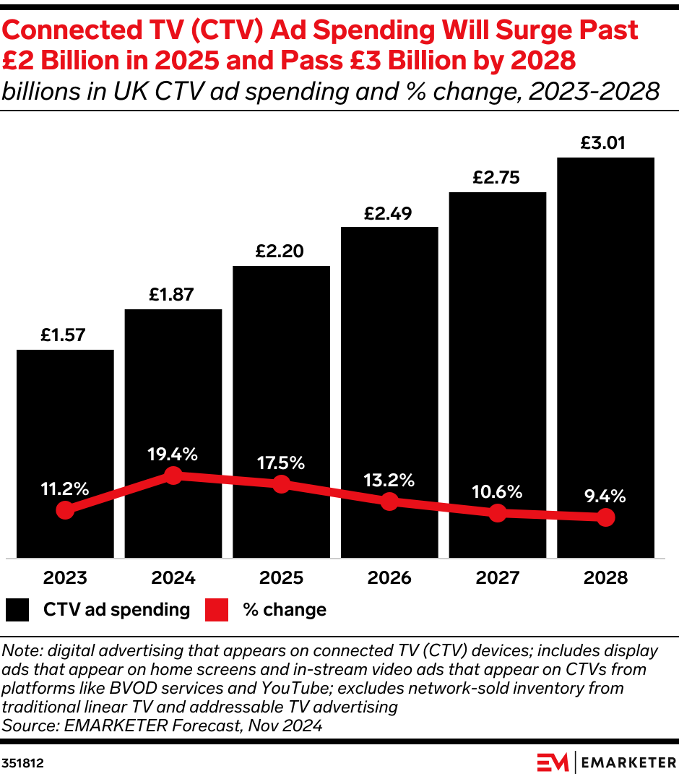
As a global integrated fundraising agency, DTV keep a close eye on how audiences consume media and the growth of this ecosystem across the UK and globally is moving at an astonishing pace. In the UK alone, CTV ad spend is projected to rise to £2.49 billion by 2026, doubling what it was just a few years ago. One of the drivers behind this rise has been the take up of Smart TVs, in the UK 87% of households possessing an internet-enabled primary TV set.
Is it for charities?
Now, I know what you might be thinking: our core donors are still watching linear TV. While that is absolutely true for right now, the media landscape is shifting quickly right under our feet. As time goes on, younger demographics growing into our classic charity donor profile will have their CTV viewing habits already deeply embedded. Embracing this channel today means you are future-proofing your fundraising strategy for tomorrow.
Isn’t it really expensive?
Traditional DRTV for charities has always been price driven and although the CTV prices are higher, (although reducing as audiences grow), the ability to target messages more precisely opens up a whole new world of possibilities.
Take a niche campaign like a kids' membership pack, for example. Trying to target families with young children through daytime linear TV was very difficult with a lot of wastage where impacts going to people who were not going to respond. With CTV, you can serve your TV ad exclusively to households with kids, making the proposition both viable and cost-effective.
How do you track it?
Response is changing also, according to yougov. 68% of UK viewers actively use their smartphones while watching TV. By adding a simple QR code to the ad, a viewer inspired to give can immediately scan to donate via their phone.
Tracking the online response of Connected TV is not an easy thing to do. Most ad inventory is served on a one to one, on-demand basis meaning no spot times and no influence on web traffic you get from linear TV spots. There are emerging methods and technologies designed to quantify response to CTV, so it is essential to understand the details of how this is going to be tracked before setting a campaign live.

Chris Clarke
Heading up the Media and Campaigns team at DTV Group, with 21 years fundraising experience and 17 in TV and Digital film, Chris has a deep understanding of getting the right fundraising message to the right audience via the right channels to drive up ROI and has been helping organisations worldwide to launch and grow their DRTV and Digital fundraising programmes.